Big tech accountability is a step in the right direction. But protecting our children means questioning the system itself.
The news of Meta facing a $25 billion fine is a significant moment in the conversation about big tech accountability. It sends an important message: even the world's largest technology companies must answer for their actions.
At Rebel Telecom, we believe this is progress.
For too long, the digital economy has operated on a model in which our personal information, our behaviour and our attention have become valuable commodities. The more a platform learns about us, the better it can target us, influence what we see and keep us engaged.
But just because a business model is profitable doesn't make it right.
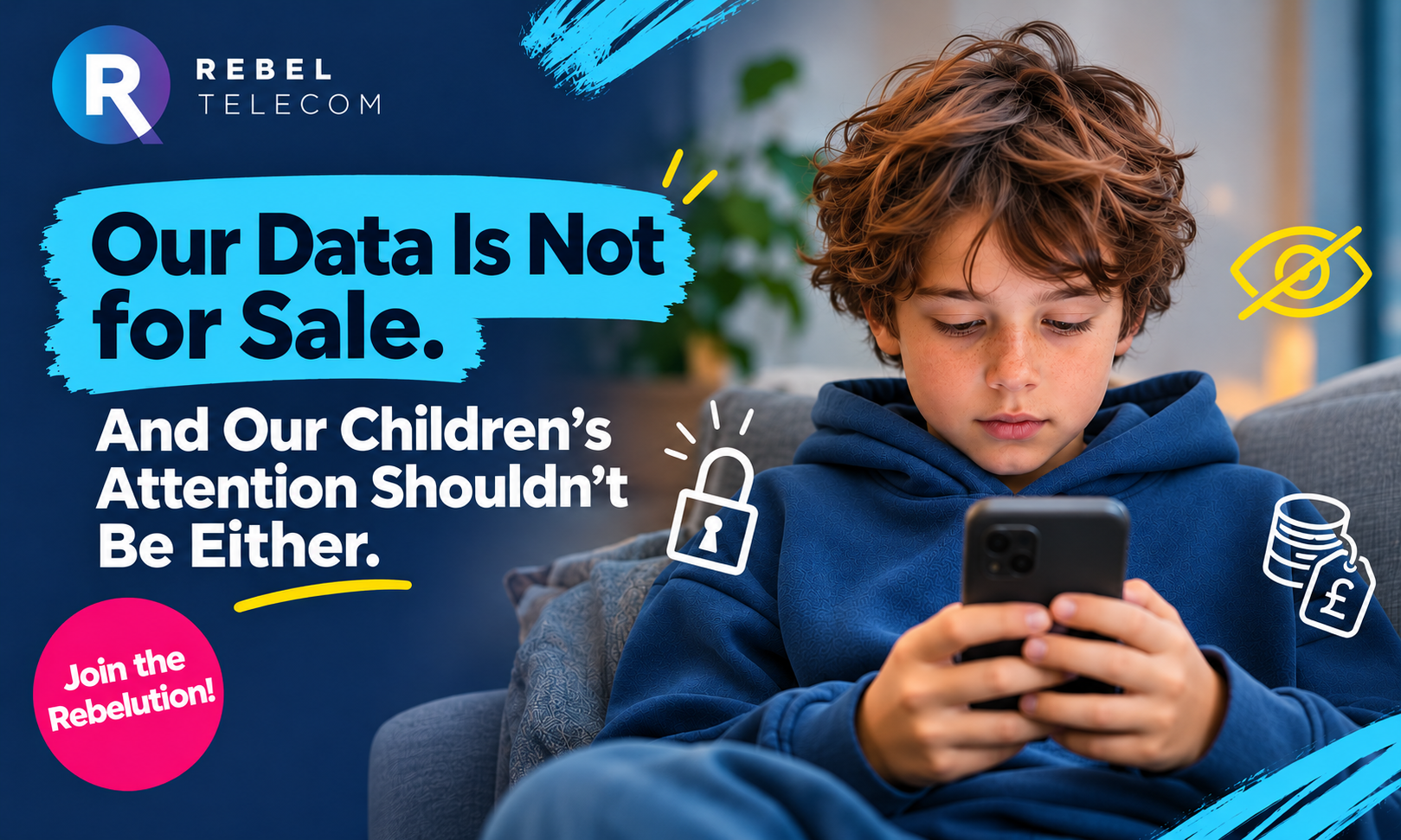
Our data should not be for sale. Our privacy is not negotiable. And our children should never be treated as another revenue opportunity.
We have reached a point where information about our private lives can be collected, analysed and sold with remarkably little understanding on our part of where it ends up. That is troubling enough for adults, let alone children who may have no idea that their online behaviour is being monitored for commercial purposes.
Accountability matters. But a fine, however significant, doesn't necessarily fix the underlying problem. The conversation needs to go further and we must ask a bigger question: why are we waiting for things to go wrong before we challenge the systems that created the problem in the first place?
Adults can make choices. Children deserve protection.
As adults, we have had time to develop our values, our moral compass and our ability to question what we see. We can learn to recognise manipulation, challenge information and decide what deserves our attention.
Of course, adults aren't immune to the influence of algorithms. These systems are sophisticated, and even the most discerning among us can be influenced by what we see repeatedly.
But children are in a different position entirely.
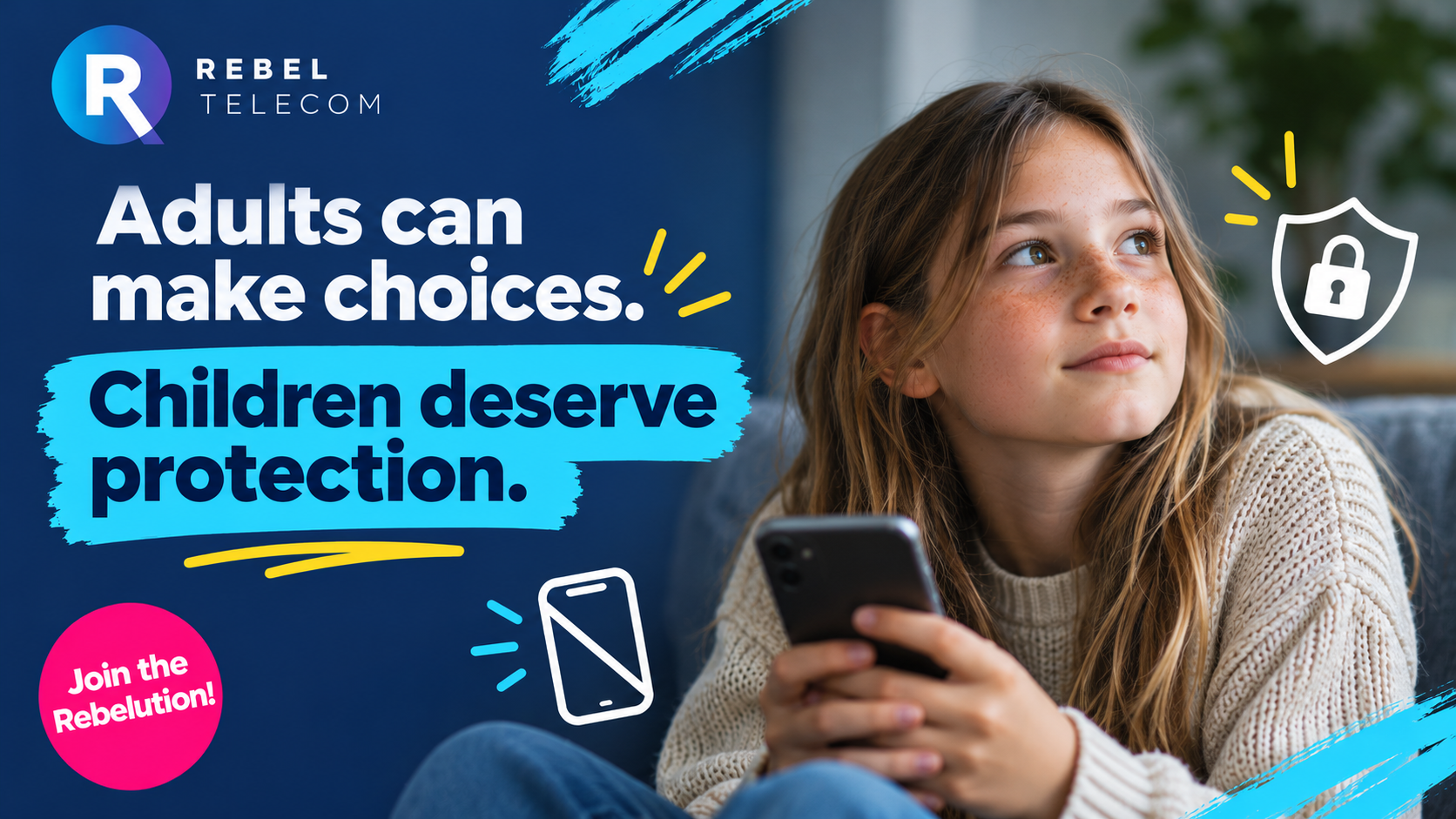
They are still developing their identities, their understanding of the world and their ability to make informed decisions. They are learning to navigate relationships, emotions, boundaries and their place in the world.
Meanwhile, many of the digital environments they enter are designed to capture and retain attention.
An algorithm doesn't know what is developmentally appropriate for a child simply because it knows what keeps that child watching. And what keeps a child engaged isn't necessarily what is best for their wellbeing.
This is the fundamental conflict. Parents want their children to grow, learn, explore, develop independence and new skills. Platforms competing for attention have different incentives. Rarely are the interests of the family and these platform compatible.
If we wouldn't accept a business profiting from manipulating our children in the physical world, why should we accept it in the digital one?
We shouldn't have to trade privacy for participation.
Technology has an important place in our lives, and it can play a positive role in childhood. It can educate, connect, inspire and open up extraordinary possibilities.
The question is not whether children should have access to technology. It's what kind of technology we are giving them, and whose interests it ultimately serves. There is an fundamental difference between giving a child a device that allows them to stay connected to their parents and friends and giving them unrestricted access to platforms that monitor their behaviour, capture their attention and keep them engaged for as long as possible. Yet both have become bundled together under the increasingly broad definition of owning a smartphone.
We should not have to surrender our privacy to participate in the digital world. Nor should we assume that our children must surrender theirs simply because they are growing up in it.
A child’s browsing habits, growing interests and online interactions can reveal a surprising amount about their personality and private life. Information collected at an age when they are barely beginning to understand the concept of privacy, could have implications long after they have forgotten the websites they visited or the videos they watched.
That information should belong to them, not to the companies looking to monetise it.
Protecting children online cannot begin and end with responding to scandals, imposing fines or asking parents to manage the consequences. Accountability matters, but so does prevention.
Sometimes the most effective solution isn't to teach children to navigate a system designed to keep them hooked. It's to choose -or build- a different system altogether.
Skip the algorithm. Keep the childhood.
At Rebel Telecom, we believe technology should enrich childhood, not take it over.
Children can benefit enormously from having a phone that allows them to connect with their parents, build independence and enjoy the reassurance of being reachable.
But having a phone doesn't have to mean having social media, endless scrolling or algorithm-driven feeds competing for their attention.
A phone can connect a child to their family and friends without connecting them to an algorithm designed to keep them scrolling.
That's the distinction we believe matters.
Rebel Telecom offers a different approach to children's mobile phones, one centred on purposeful connection rather than introducing children to the attention economy before they are ready.
Instead of asking parents to rely solely on screen-time limits, parental controls or a child's developing self-discipline, we believe in making a better choice from the outset.
The aim isn't to keep children away from technology. It's to give them the benefits of connection and the opportunity to develop a healthy relationship with it, without assuming that access to a smart device must also mean access to everything that comes with it.
We don't have to wait for another headline, another investigation or another fine to rethink what we put in our children's hands.
We can start now.
We shouldn't have to wait for big tech to get it wrong.
The growing scrutiny of big technology companies is encouraging. It signals that public trust, privacy and digital responsibility can no longer be treated as secondary considerations. But accountability after the fact is only part of the answer.
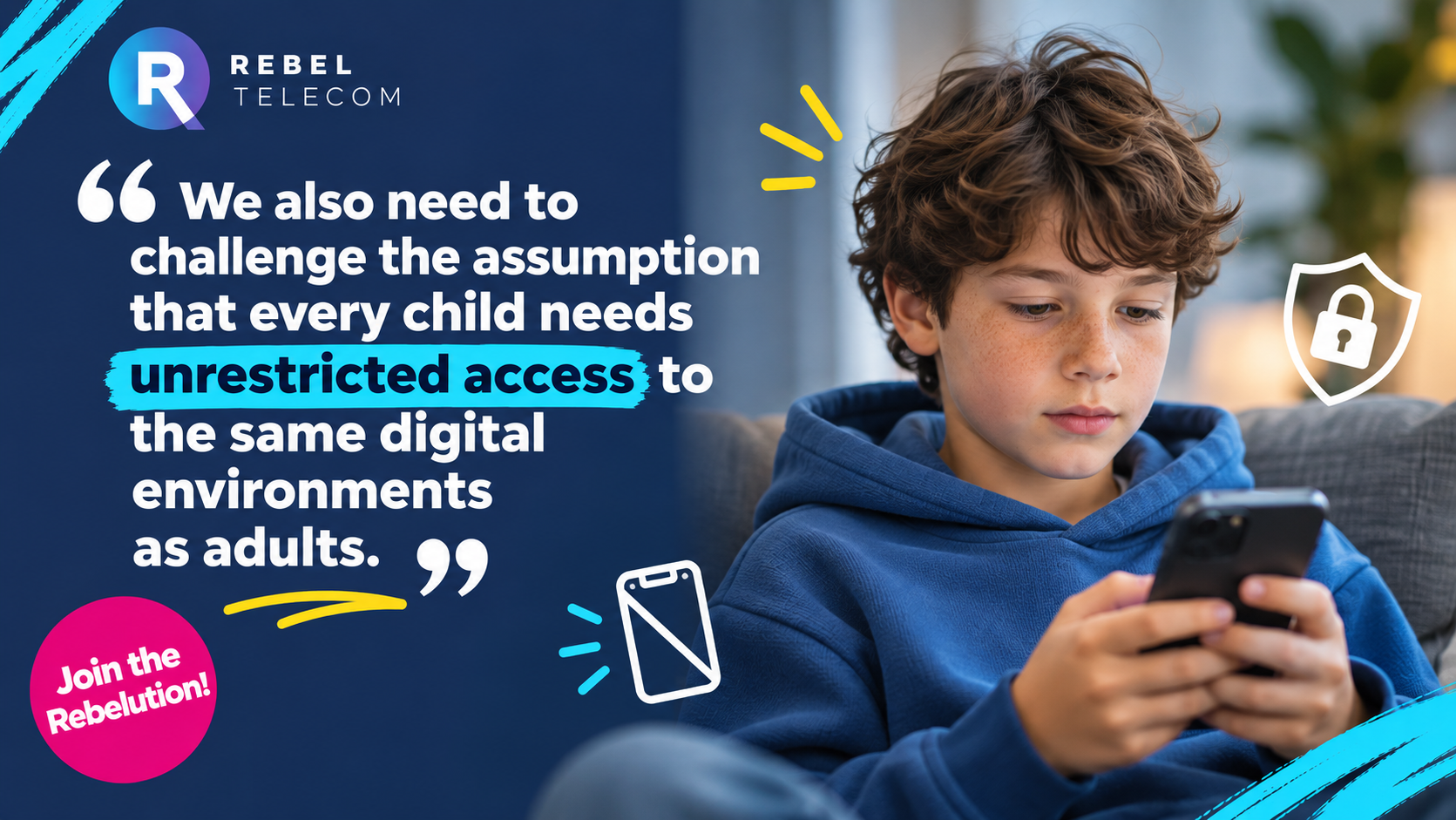
We also need to challenge the assumption that every child needs unrestricted access to the same digital environments as adults, or that growing up with technology must mean growing up inside the attention economy.
It doesn't.
We can choose technology that serves us, rather than technology that expects us to serve it. We can value connection without treating privacy as a bargaining chip. And we can give our children the freedom to build independence without handing their attention over to platforms competing for more of it.
At Rebel Telecom, we believe parents deserve better choices and children deserve the opportunity to experience childhood without a constant battle for their attention.
We're not waiting for the industry to catch up with the conversation. We're offering parents an alternative today.
Because the future of technology shouldn't be about finding better ways to capture our children's attention. It should be about giving that attention back to them.
And when it comes to helping children skip the algorithm, we'd rather be ahead of the curve than wait for the next scandal.