There’s a strange contradiction at the heart of the way we introduce children to technology. We worry about screen time, tell them to put their phones down, to live in the present. But then we hand them a conventional smartphone containing social media, endless feeds, notifications and an open internet, and expect them to manage it responsibly.
That’s a lot to ask of a child, particularly when many adults struggle to manage their own relationship with their phones.
The Rebel Phone starts from a different place. Rather than giving children access to everything and relying on them to resist the most addictive parts of modern technology, it puts boundaries in place from the beginning. The idea isn’t to remove technology from childhood. It’s to give children the chance to develop a healthier relationship with it.
Screen Addiction Isn’t Just About Screen Time
Rebel Telecom co-founder Munur Shah knows how easily an unhealthy relationship with technology can develop.
Long before Rebel Telecom existed, Munur had his own wake-up call. One evening, he became so absorbed in his phone that seven hours disappeared. His family went to bed and a friend visited the house, by the time he looked at the clock, it was 2:31am.
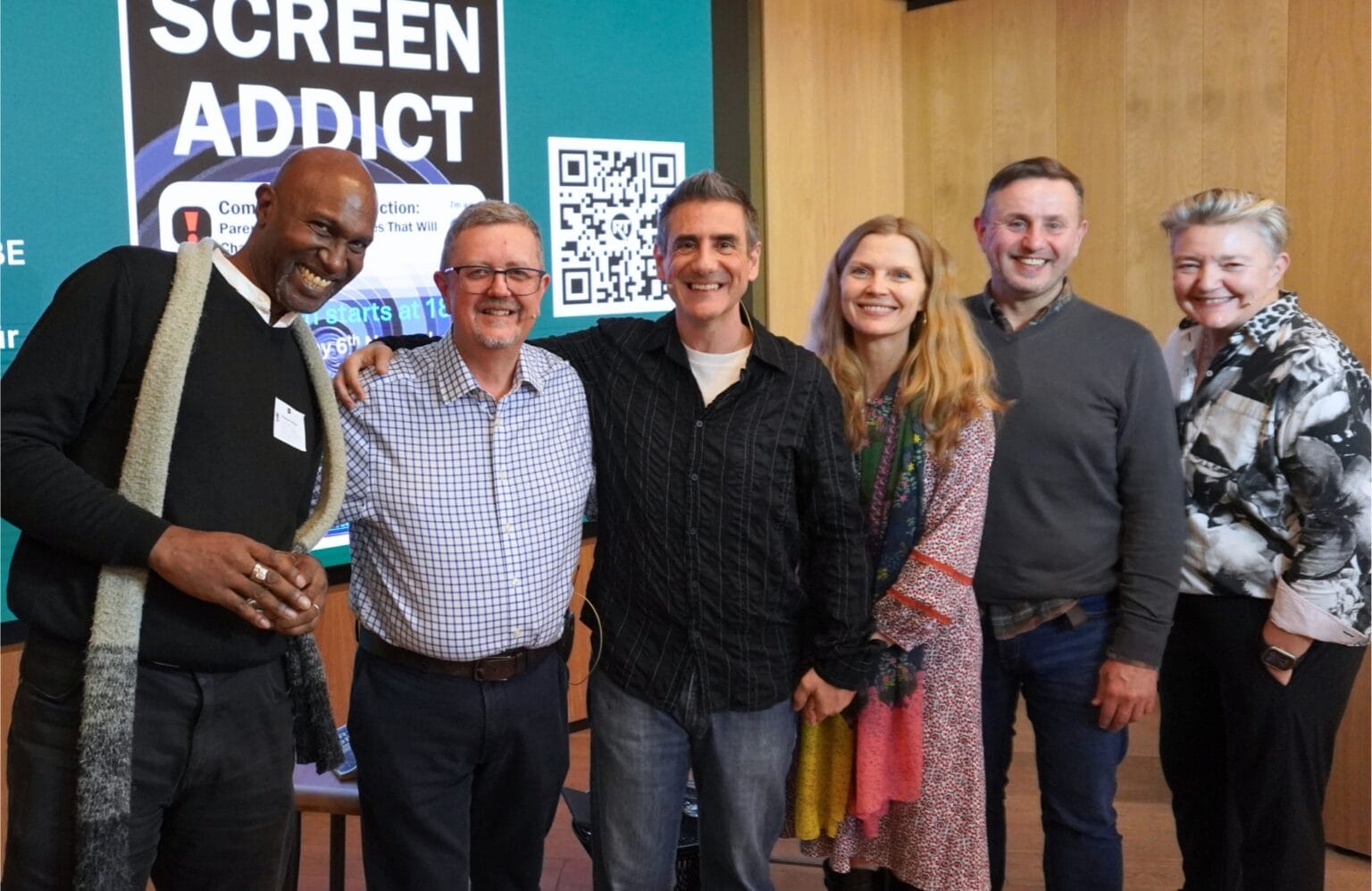
That experience sent him back to his background in behavioural science. He wanted to understand why putting the phone down could be so difficult and why so many of us find ourselves reaching for it without really thinking. His research eventually led to his book, Screen Addict - Parenting Success Stories That Will Change Your Life, and his work with children and families through Rebel Therapies.
One of the lessons from that work is that simply telling somebody to use their phone less misses much of the problem. We need to look at what they’re actually doing on the screen.
There’s a difference between spending half an hour making music and spending half an hour endlessly scrolling through short-form videos. Both count as 30 minutes of ‘screen time’, but they are very different ways of using technology. That distinction matters when we’re thinking about the kind of digital habits children develop.
Remove the Temptation, Not the Technology
Most parental controls work by taking a conventional smartphone and trying to restrict it afterwards. The apps, browser and social platforms are all there, but parents are given tools to limit when or how they can be used.
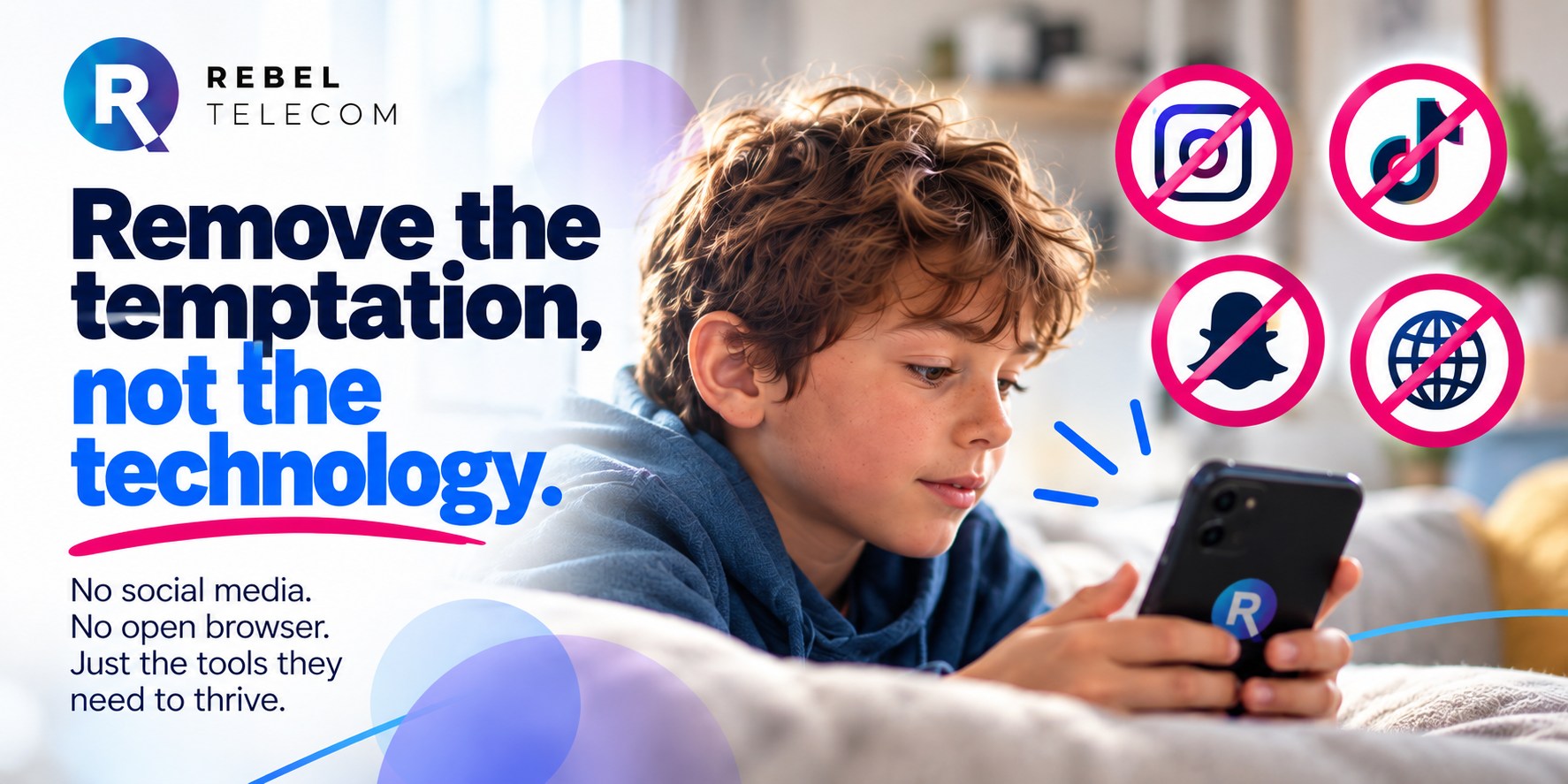
The Rebel Phone turns that around. Social media isn’t blocked. It’s not there. There is no open browser either.
That means a child’s first smartphone doesn’t automatically come with TikTok, Instagram and endless feeds. They can still call and message people, use maps and access the apps they need, but the things most likely to turn a quick check of their phone into an hour of scrolling aren’t sitting there waiting for them.
This isn’t about pretending social media doesn’t exist. Children will encounter it eventually. The question is whether they need unrestricted access to it from the moment they receive their first smartphone.
Technology Can Still Be Fun
Taking away endless scrolling doesn’t mean giving children a boring phone.
Children want to explore, listen to music, make things, play and learn. Technology can brilliant for all of those things. The Rebel Phone has a curated app store with more than 300 apps, some of them are educational, some of them are creative, all of them interesting and suitable for children.
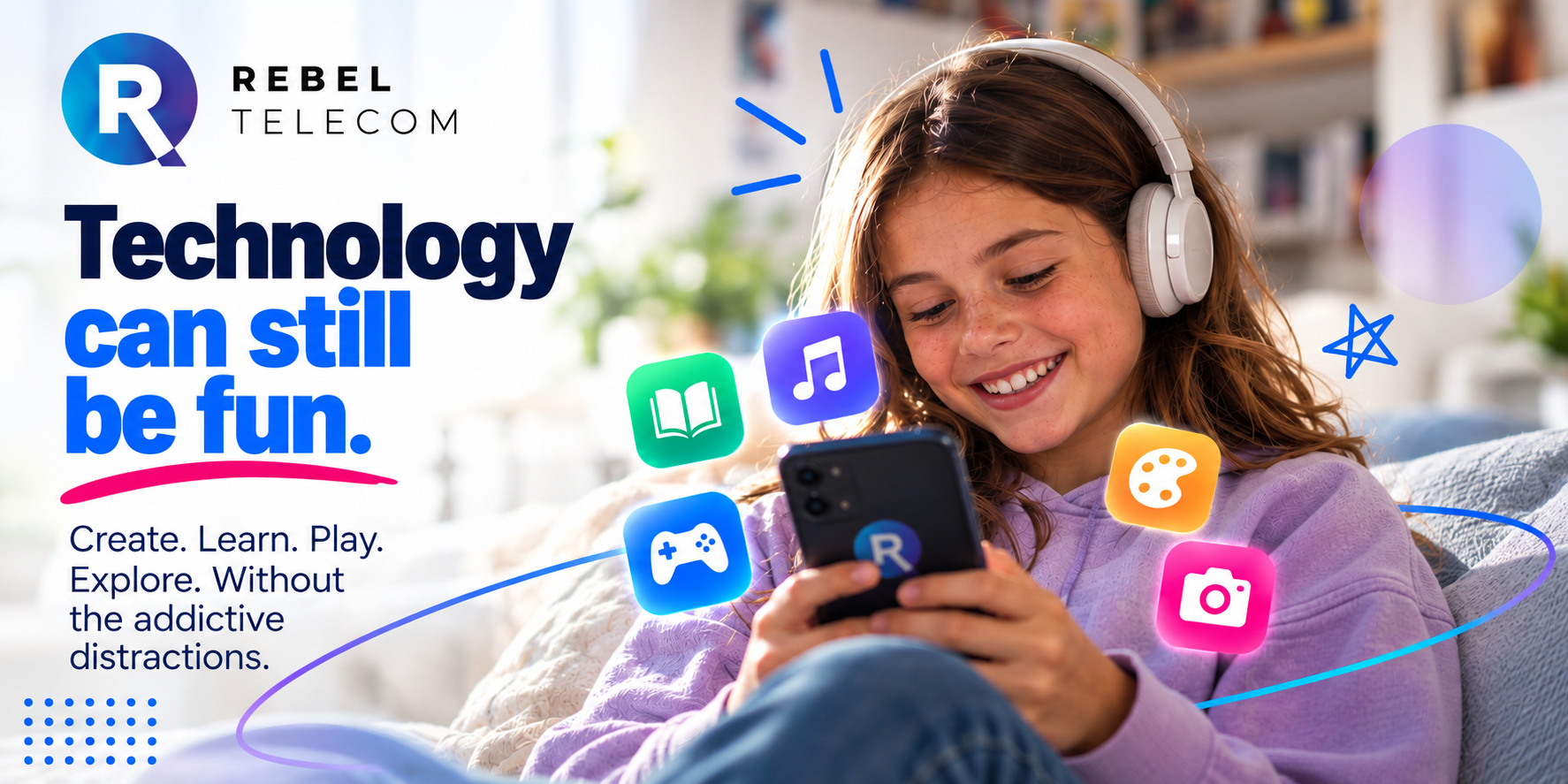
Our hope is that after using a Rebel Phone a child feels like they have done something fulfilling, rather than feeling as they’ve lost a couple of hours to mindless scrolling.
A child might pick up their phone because they want to create something, listen to something; that is very different from opening it because a notification has distracted them from what they were doing, or they’ve been hooked in by some engaging content.
Parents Shouldn’t Have to Fight the Phone
Anyone who has tried to end a child’s screen time halfway though a game or video knows how quickly a phone can become a source of fiction. Parents are often left negotiating over another five minutes or trying to enforce limits on devices that are designed to make people want to stay on them.
The Rebel Parent App gives families tools to manage screen time and app access. Rather than negotiating the same boundaries from scratch every evening, parents can make them part of how the phone works.
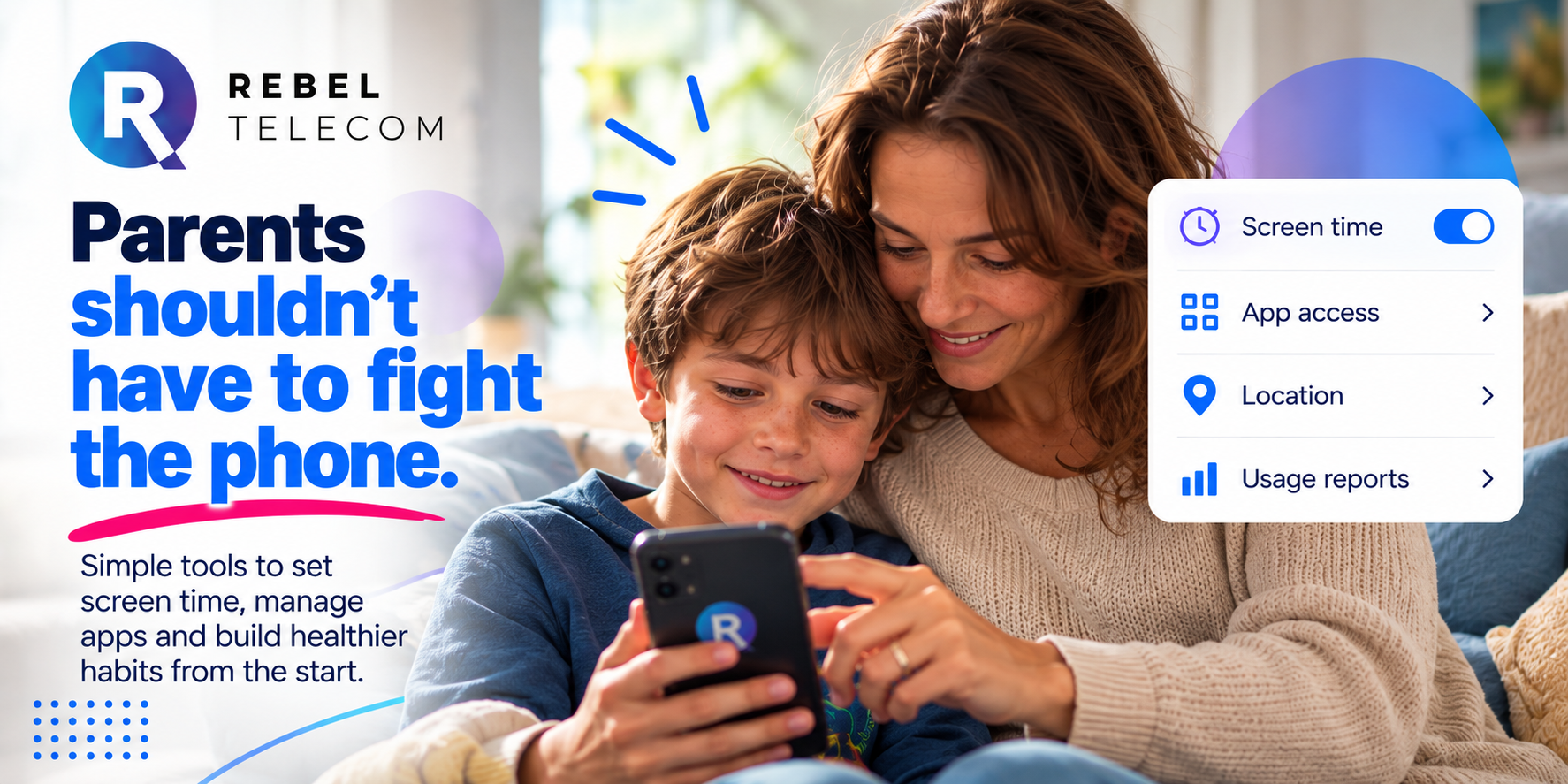
That doesn’t replace conversations between parents and children, and it shouldn’t. Technology alone isn’t going to teach a child how to develop healthy habits. But sensible controls can make those conversations easier to put into practice.
Parents don’t have the time, energy or desire to control every second of their child’s digital life. Rather with the Rebel Phone they can set boundaries far in advance, boundaries that are consistent that the child can easily understand and accept.
Building digital independence
There isn’t one perfect amount of screen time for every child. A seven-year-old and a 15-year-old shouldn’t necessarily have the same digital freedoms, and two children of the same age may not be ready for exactly the same things.
That’s why we prefer to think in terms of digital independence. Children can begin with guardrails and gain more responsibility as they grow, learn and become better equipped to make their own decisions.
The eventual goal isn’t a teenager or adult who needs somebody else to control their screen time forever. It’s someone who understands technology well enough to control it themselves.
We aren’t going to solve screen addiction by pretending smartphones are going away. Children are growing up in a digital world, and technology will be part of their education, friendship and eventually their working lives.
The challenge is making sure their first experience of that world isn’t built around keeping them online for as long as possible. The Rebel Phone offers another starting point: useful technology, sensible boundaries and the opportunity to learn good habits from the beginning.