Bedtime has become one of the strangest battlegrounds of modern parenting.
Children need their phones for perfectly sensible reasons. They use them to speak to friends, contact family, check tomorrow's plans or listen to music. But the same device sitting on the bedside table can also contain social media, games, an open browser, notifications and a practically endless supply of content.
So perhaps the problem isn't simply that children have phones in their bedrooms. It is what those phones are capable of doing once the lights go out.
Sleep and smartphones are becoming difficult to separate
There is now a substantial body of research connecting children's digital habits with sleep.
A 2025 umbrella review brought together seven systematic reviews covering 127 studies and more than 867,000 participants. It found digital-device use was associated with poorer sleep duration, later bedtimes and worse sleep quality. Some of the strongest disruption was associated with social media and internet use, particularly when that use happened late at night.
But there is an important bit of nuance here.
Not every minute spent looking at a screen has the same effect. A 2026 meta-analysis found that overall daily screen time had only a small relationship with later sleep onset, while screen use after bedtime showed a stronger negative relationship with sleep quality.
In other words, telling children simply to "spend less time on screens" might miss the point.
What happens at bedtime matters.
The problem doesn't disappear when the phone reaches the bedroom
Think about what an unrestricted smartphone offers a child at 10pm.
There might be a message from a friend. That takes them into a messaging app. Then there's a notification from another app. A video appears. Another follows. Before long, checking the phone for a couple of minutes has turned into something much longer.
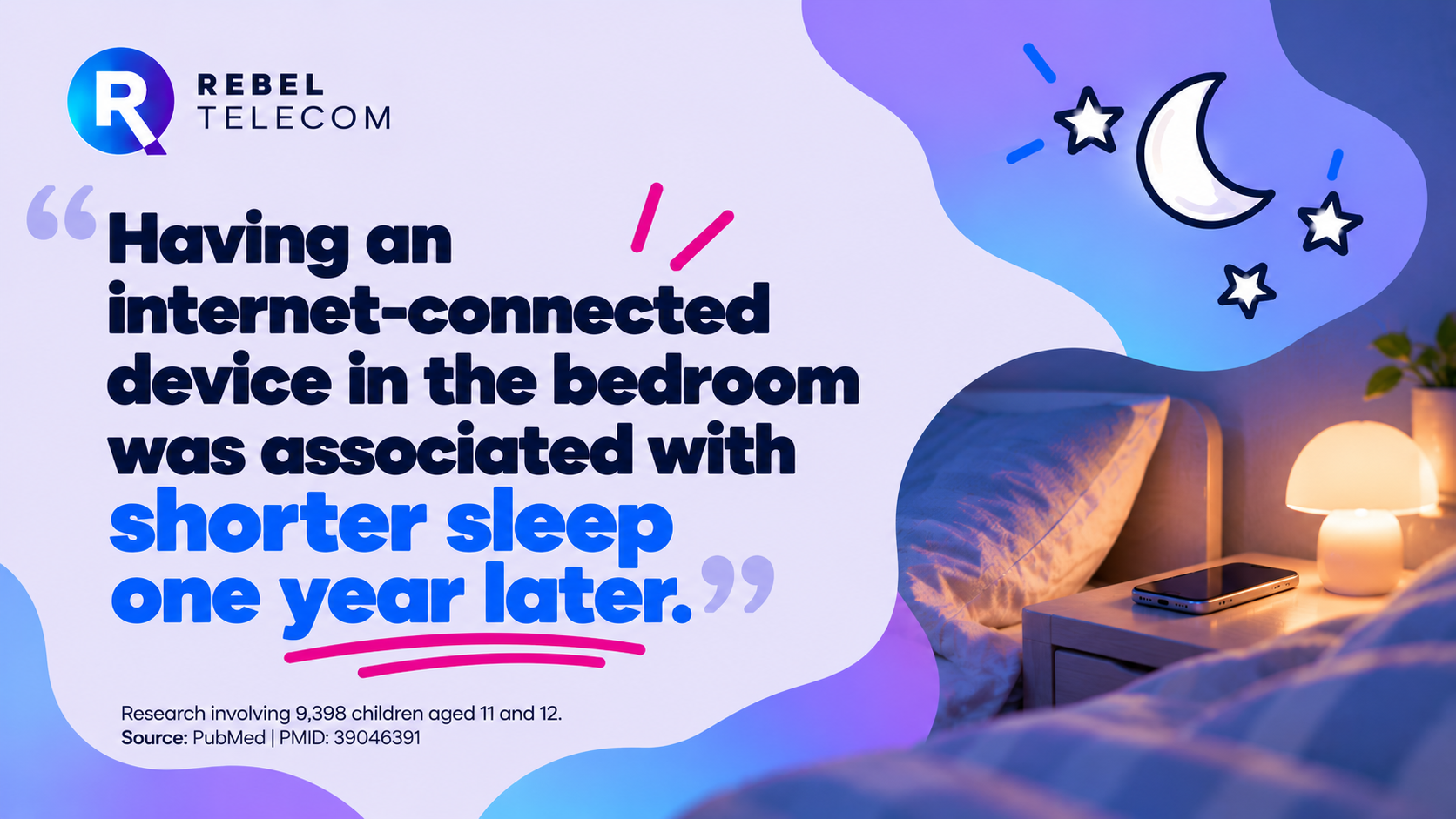
Research involving 9,398 children aged 11 and 12 found that having an internet-connected device in the bedroom was associated with shorter sleep one year later. Children who left their phone ringer on overnight also experienced shorter sleep and had greater odds of sleep disturbance than those who switched their phone off at bedtime.
Another study used cameras and wearable devices to examine what young people actually did around bedtime. Every additional 10 minutes of screen use while in bed was associated with three minutes less sleep. Interactive activities were particularly disruptive, with every additional 10 minutes associated with nine minutes less sleep in that study.
The issue isn't merely the glow of a screen. It's everything competing for the child's attention through it.
Social media creates another reason to stay awake
Social media adds something particularly difficult to bedtime: there is no natural finishing point.
Books have a final page. Films have a conclusion. An endless feed? The clue is in the name.
A recent review of longitudinal research found that around two-thirds of the studies examined linked social-media use with poorer subsequent sleep, with problematic use and bedtime use showing the clearest negative associations. Later bedtimes and taking longer to fall asleep were among the most consistent findings. The researchers also stressed that the evidence has limitations and does not prove that social media alone causes poor sleep.
That distinction matters. We shouldn't pretend every sleep problem can be blamed on smartphones.
But we can question whether giving a child unrestricted access to systems designed around continual engagement makes bedtime any easier.
What changes with a Rebel Phone?
This is where the design of the phone matters.
The Rebel Phone doesn't contain social media or an open web browser. Children can still call and message, use maps, listen to music and access a curated selection of apps, but some of the biggest sources of endless late-night consumption aren't sitting there waiting to be opened.
That changes the relationship with the device.
Rather than asking a child to repeatedly resist another video, post or feed, some of those temptations simply aren't present in the first place.
Parents can also use screen-time controls to establish when and how the phone is used. A bedtime routine can therefore become part of the way the device works, rather than another argument that has to happen every evening.
There is evidence that these kinds of boundaries can make a difference. A systematic review of interventions designed to reduce children's screen use found they reduced screen time by an average of 33 minutes a day and increased sleep by around 11 minutes a day.
Eleven minutes might not sound dramatic. Across a school year, however, small improvements in a nightly routine can add up.
A phone that becomes quieter at night
None of this means a Rebel Phone guarantees better sleep.
Sleep is affected by plenty of things, from routines and stress to caffeine, physical activity and the environment a child sleeps in. Parents still have an important role in deciding when phones should be put away, where they should be charged and what bedtime looks like in their home.
The difference is that the device doesn't have to work against those decisions.
Research with adolescents has found that bedtime social-media use isn't purely a question of self-control. Young people describe social expectations, fear of missing out and habitual checking as reasons they remain connected.
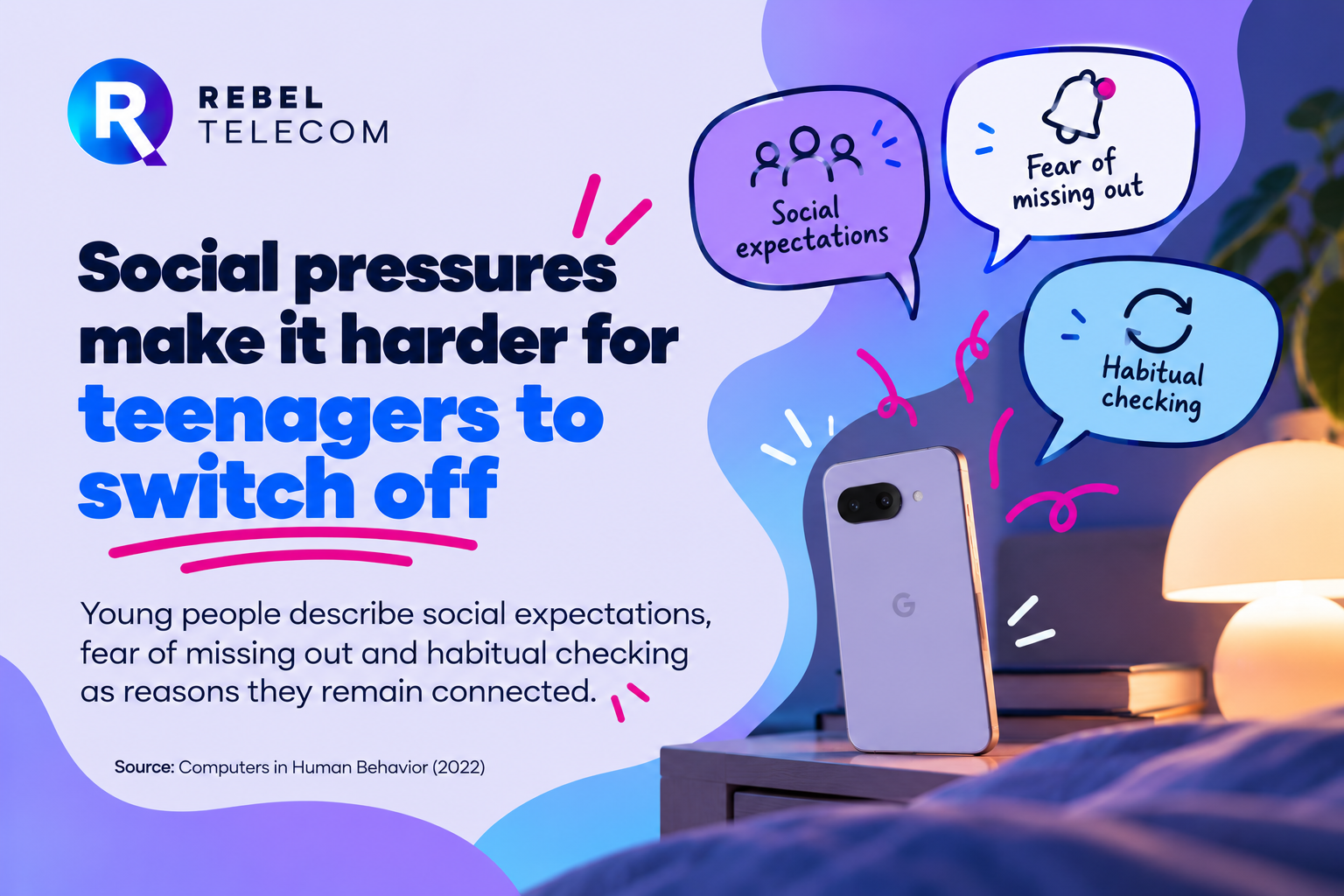
Removing some of those digital distractions gives a child fewer reasons to pick their phone back up.
They can still have the reassurance of being contactable. They can still message their friends earlier in the evening. They can still have a smartphone that feels useful and enjoyable.
It just doesn't need to offer an endless stream of reasons to stay awake.
Better digital habits can start with the first phone
We often respond to unhealthy technology habits after they have developed.
A child gets an unrestricted smartphone. Boundaries become difficult. Screen time creeps upwards. Then parents start looking for settings, restrictions and parental-control apps to pull things back.
There is another way to approach it.
Start with a phone designed around the habits you actually want a child to develop.
Bedtime is a good example of what that can mean. The Rebel Phone helps parents set boundaries early on, with its bedtime mode effectively disabling the device completely.
It means their first phone can help them become more independent, without demanding their attention long after the sun has set.