
Technology is now part of almost every part of childhood.
Children use devices to learn, communicate, navigate the world and stay connected with friends and family. But as smartphones become an increasingly important part of growing up, parents are asking a bigger question:
How much technology is healthy for our children?
The answer isn't necessarily to remove technology altogether.
It's about helping children develop a healthier relationship with it.
That is where the idea of digital minimalism comes in.
Digital minimalism isn't about being anti-technology. It's about being intentional about the technology we allow into our lives, choosing tools that add value rather than allowing technology to dictate how we spend our attention.
For children, this can mean something particularly important: giving them access to the benefits of being connected without giving them unlimited access to everything the internet has to offer.
Why Childhood Technology Needs a Rethink
The smartphone a child receives today is often the same technology designed for an adult.
That means a device intended to help them call home or message their friends can also give them access to social media, open web browsing, endless content and notifications designed to keep them coming back.
For a child who is still developing their ability to manage attention, impulses and online behaviour, that can be a lot to navigate.
The challenge for parents isn't simply deciding whether their child should have a phone.
It's deciding what kind of phone, what kind of access and what kind of digital environment is right for them.
The Problem with Constant Connection
Phones can be incredibly useful. But constant connectivity can also make it harder to switch off.
Notifications, messages and the expectation of being available can interrupt homework, family time, conversations and sleep.
And then there is the endless stream of content.
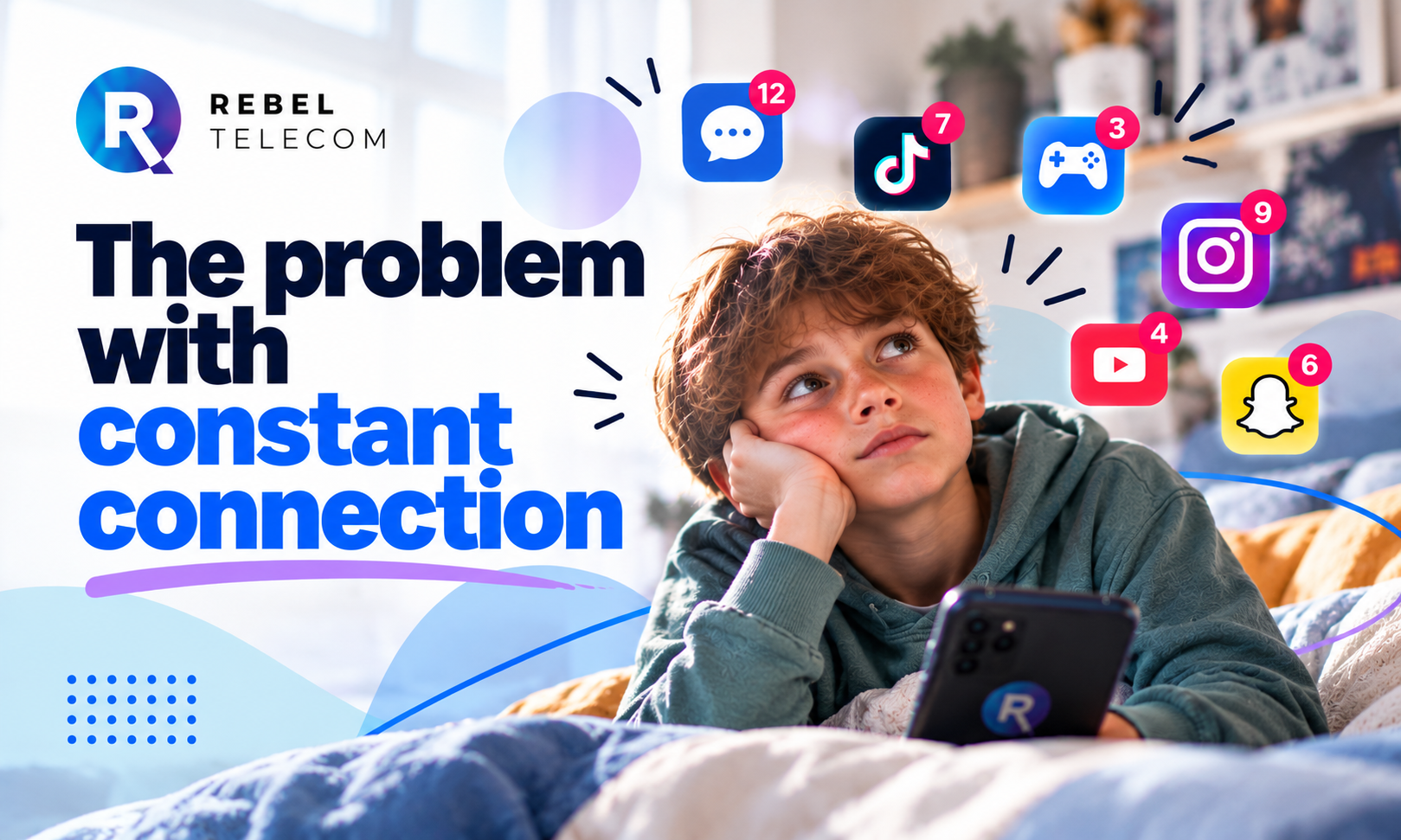
Social media and other digital platforms are designed to encourage continued engagement. A child can open a phone intending to check one message and find themselves scrolling through content minutes later.
The issue isn't that every minute spent online is harmful.
It's that mindless consumption can easily replace intentional use.
A healthier approach starts by helping children understand the difference.
Digital Minimalism isn't Digital Deprivation
The goal isn't to keep children away from technology.
Children need digital skills. They need to learn how to communicate online, use technology responsibly and eventually navigate an increasingly digital world.
Digital minimalism simply asks us to be more deliberate about what technology is doing in their lives.
Instead of asking:
"How can I stop my child using their phone?"
We can ask:
"What do I actually want my child's phone to help them do?"
Stay connected with family?
Get home safely?
Message friends?
Navigate independently?
Listen to music?
Take photographs?
Use useful apps?
Learn?
Once you answer those questions, it becomes much easier to decide what doesn't need to be there.
Less Digital Noise, More Room for Real Life
One of the principles behind digital minimalism is simple:
Technology should create value, not simply consume attention.

For children, that might mean a phone that helps them stay connected without becoming a constant source of entertainment.
It might mean fewer notifications.
It might mean no social media.
It might mean limited screen time.
It might mean no open internet access.
It might mean having technology-free times and places at home.
These aren't necessarily restrictions for the sake of restrictions.
They can create more space for the things children need as they grow: conversation, creativity, play, friendships, movement, learning and simply being bored enough to discover something new.
Helping Children Build Healthy Digital Habits
Healthy technology habits are easier to establish when children are young.
Here are a few practical places to start.
1. Create Technology-Free Moments
Decide which moments in your family should be phone-free.
That might include mealtimes, family conversations, homework or the hour before bed.
The important thing is consistency.
2. Turn off Unnecessary Notifications
Not every app needs permission to interrupt your child.
Reducing notifications can help make the phone quieter and make it easier for your child to decide when they want to engage with it.
3. Think About What the Phone Actually Needs to Do
A first phone doesn't need to replicate an adult smartphone.
For many children, the essentials are surprisingly simple:
Calling family
Messaging trusted contacts
Maps and navigation
Useful apps
A camera
Music
Safety features
The ability to contact someone when they need help
Everything else can be considered separately.
4. Set Boundaries Before There is a Problem
It's much easier to establish healthy expectations when a child first gets a phone than to try to take back unlimited access later.
Talk about where and when the phone can be used.
Agree on charging routines.
Discuss what happens if something online makes them uncomfortable.
And make sure your child knows they can come to you without fear of immediately losing their phone.
5. Model the Behaviour
Children notice what adults do.
If parents are constantly checking their phones during dinner, conversations or family time, it becomes difficult to explain why children should behave differently.
Digital wellbeing is a family habit, not simply a child rule.
The First Phone Doesn't Have to Mean the Open Internet
Getting a first phone is an important milestone.
It can give children greater independence while giving parents reassurance that they can stay in touch.
But independence doesn't have to mean unrestricted access.
There is a difference between giving a child a way to communicate and giving them an unrestricted gateway to the internet.
That distinction is becoming increasingly important as parents rethink what a first phone should actually be.
A purpose-built device can give children the independence they need while introducing technology at a pace that makes sense for their age.
Technology Should Work for Your Child
The idea behind digital minimalism is ultimately quite simple: Use technology intentionally.
For children, that principle can start with their very first phone.
A phone can be a tool for connection, independence, creativity and safety without becoming a constant source of distraction.
At Rebel Telecom, we believe children deserve a different kind of relationship with technology.
One where they can be connected, not consumed.
That's why the Rebel Phone is designed around what children actually need from a phone, rather than simply giving them a smaller version of an adult smartphone.
No social media. No open web browsing. A curated app environment. Parental controls. Screen-time tools. Location features. And the ability to stay connected with the people who matter.
Because the goal isn't to keep children away from technology.
It's to help them grow up knowing how to use it.
A Healthier First Step
Digital minimalism doesn't happen overnight.
Start small.
Look at the technology your child uses. Ask what purpose each part serves. Remove what isn't necessary. Create boundaries around what remains.
And when it is time for their first phone, remember that more access isn't necessarily more independence.
Sometimes, giving children exactly what they need is the more thoughtful choice.
Connected, not consumed.